Our Bigfoot Research
In our Sasquatch / Bigfoot research, technology definitely helps us see things that otherwise tend to be hidden, so we take the following research tools on our expeditions:
Night vision with infrared to see in the dark
Stealth cameras that are placed in trees at suspected crossing paths
Digital cameras and a HD video recording device
3 digital audio recorders, and a shotgun microphone to zoom in on sounds
But the most important thing is to spend as much time as possible exploring the beautiful
Rocky Mountains.
Our greatest asset is our camping gear that allows us to stay in remote areas for up to
2 weeks at a time, even in sub-freezing temperatures. Our longest trip this year was eight consecutive nights in the field.
What do we look for in our Bigfoot research?
Besides the obvious answer of Class 1 Bigfoot sightings, there are signs to look for to detect their presence.
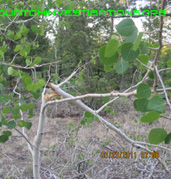 |
Tree BreaksTrees, often Aspen trees, that are broken and the top part is stripped down and angled sideways. Sasquatch may do this as a show of force and/or to mark their territory. |
| . | |
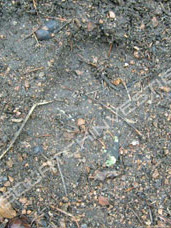 |
‘Bigfoot’ FootprintsWe look for footprints that are very long and wide, that are obviously not be human. Toe impressions are important, since people don’t walk around barefoot in the woods. Sasquatch are very heavy, so their foot compacts the soil much more than other animals. The stride, which is the length between the footprints, indicates the height of the animal. |
| . | |
 |
Bigfoot ScatWhere there’s animals, there’s scat, and large scat indicates a big animal. The length of the pile exceeded 12″. Bears typically eat berries, so they will show up in the scat. This scat also had a very pungent smell that we feel most resembles the smell of a Sasquatch. |







{ 7 comments… read them below or add one }
Fresh snow means …. SNOW TRAX !!
I enjoy your website because of the openess you have to all possibilities. Quite refreshing from some of the other dogmatic and egotistical Bigfoot groups. No one has all the answers, probably never will!
I have been blessed with multiple visual sightings and have obtained a number of pictures, videos and night vision images of this highly elusive subject. I downloaded one to U-tube called “Young Bigfoot Caught Peeking”. It is not my best stuff, but shows how cautious they can be even at distances…..
I am planning on doing some hiking here in Colorado, do you have any good places I can go where I might see something in Colorado?
I seen 2 on the road and one in the field across from the two on the road. It stood still like a dear until I put my bright lights on it’ the it flip and ran on all four faster then I have ever seen anything run before.. The to on the road didn’t move they were looking in to some kind of light. The one in the field was coming toward the light. I watched the hair and fat move back and fourth as it ran I was in total shock . I was 43 miles out side of any town. At first I thought it was young people lost looking down at a phone to the left of the road but they didn’t look up at all when I moved to the right of the road not to hit was in the road is when I seen the big one in the field..
We are doing a radio show tomorrow on consperciey theories. Would anybody like to come on Rush to Reason – Denver’s Afternoon Rush and talk about “Bigfoot”. I have openings tomorrow at 4:30, 5, or 5:30pm MT.
Dan Meurer
Producer – Co-Host
“Rush to Reason”
“Denver’s Afternoon Rush!”
“Rush to Reason” Weekdays 3 to 7pm
KLZ 560AM 100.7FM – Denver
Text or Call me @ (303) 927-9220
Northern Bigfoot,
Famous for its numerous Bigfoot sightings and local ordinance protecting the Cherished “monster”, Whitehall’s First Sasquatch Calling Festival Will be held Saturday September 24th, in Skenesborough Park on the Champlain Canal. The festival will feature free screenings of the local documentaries from SMALL TOWN MONSTER PRODUCERS. The films “The Beast of Whitehall” and “Minerva Monster” will be shown in the Pavilion.
The Sasquatch Calling contest First prize winner will receive a cash prize for the best Hollering. There will also be prizes for best Sasquatch/Bigfoot costume and a presentations by local Sasquatch researcher and author Paul Bartholomew and Vermont researcher Frank Siecienski.
Eclectic live music will be playing simultaneously in Whitehall’s amphitheater adjacent to the pavilion. Vendors also have the option to reserve booth space. We’ll also have a bigfoot barbecue and more special activities.
The Festival is presented by the Whitehall Beautification & Enhancement Committee. For more information contact David Molenaar (primary contact) at (518) 499-0874 or Jason LaMoy (advertising & recruitment) at (518) 223-5460 or by email JasonLaMoy@yahoo.com
We are also very much interested in having more guest speakers, Sponsors, Musicians and Vendors. Please contact us if you’re interested.
Thank you,
Jason LaMoy
Most, if not all, sightings of Bigfoot or Sasquatch are gnostic overlays of the visual cortex, so one is seeing something that isn’t there. Also true of the Burning Bush of Moses, or The Transfiguration of Jesus Christ. Who is doing this? Advanced alien civilizations from afar. How? Science and technology. Wake up!
{ 8 trackbacks }